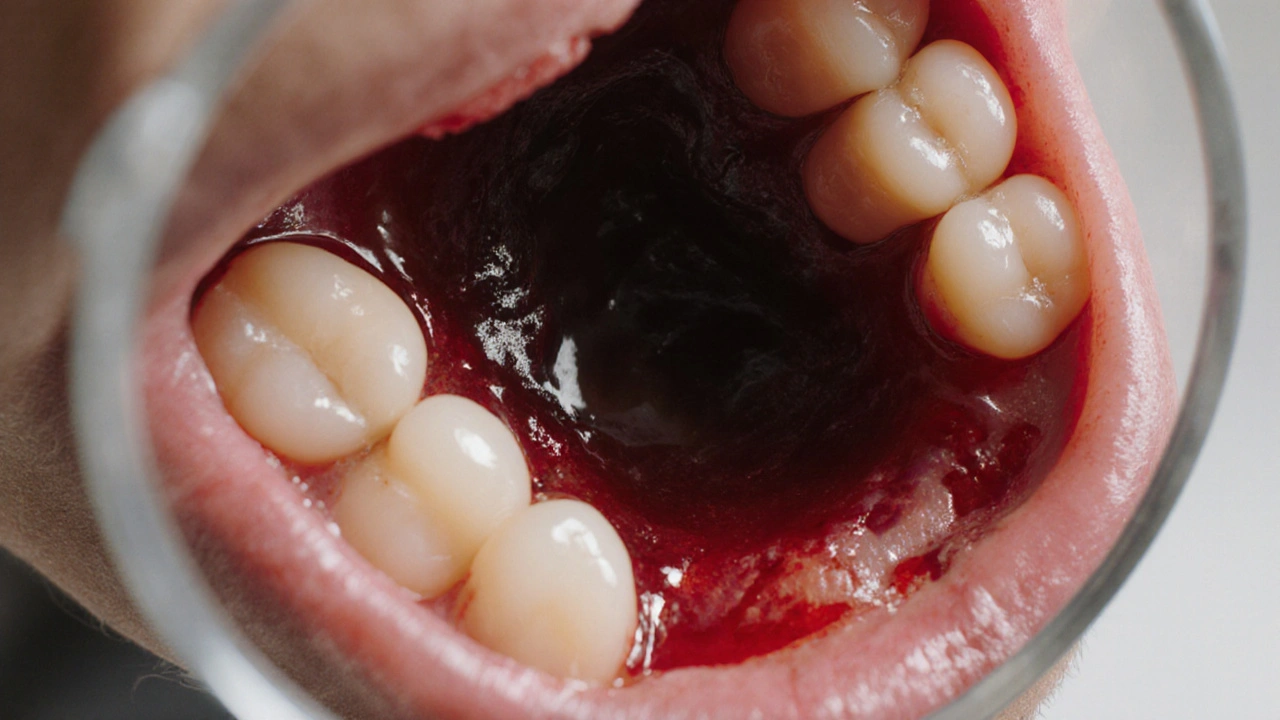
Krevní sraženina: Co to je, proč se tvoří a jak to ovlivňuje zuby
When you have a tooth pulled, your body doesn’t just close the hole—it builds a krevní sraženina, je to přirozený krevní sraženinový kryt, který se tvoří v důlku po vytažení zubu a chrání tkáně před infekcí a zrychluje hojení. Also known as zubní výlusk, it is the first and most important step in healing after extraction. Without it, your socket is exposed to bacteria, food, and air—and that’s when pain starts.
Many people don’t realize that a krevní sraženina isn’t just a clot—it’s a biological scaffold. It holds stem cells, growth factors, and proteins that rebuild bone and gum tissue. If you rinse too hard, smoke, or suck through a straw after extraction, you can dislodge it. That’s when you get dry socket, komplikace, která vzniká, když se krevní sraženina ztratí nebo se nesestaví správně, a vystaví kost a nervy. It doesn’t just hurt—it delays healing by weeks and often needs professional treatment. This is why dentists warn you not to spit, drink hot liquids, or eat crunchy food right after a tooth removal.
And it’s not just about extractions. A poor or missing krevní sraženina can also be a sign of deeper issues—like chronic zánět dásní, stav, kdy dásně jsou stále zánětlivé, což brání tvorbě zdravé krevní sraženiny a zvyšuje riziko ztráty zubu. If your gums bleed easily or stay swollen, your body may struggle to form proper clots even after minor trauma. That’s why regular cleanings and treating gum disease early matter. Kyretáž zubů isn’t just about removing tartar—it’s about creating a clean, healthy base where krevní sraženina can form properly if needed.
What you’ll find in the articles below are real stories and practical advice from people who’ve been through it: how to protect a clot after extraction, what to do if it falls out, why some people never form one properly, and how gum health affects everything. No fluff. Just what works.